在第一部分中,我們探討了腸道中數萬億微生物如何影響從免疫力到心理健康的一切,以及為什麼亞洲地區的腸道問題正在增加。但這些問題的真正原因是什麼,我們又該如何改善?
什麼導致腸道健康不佳?
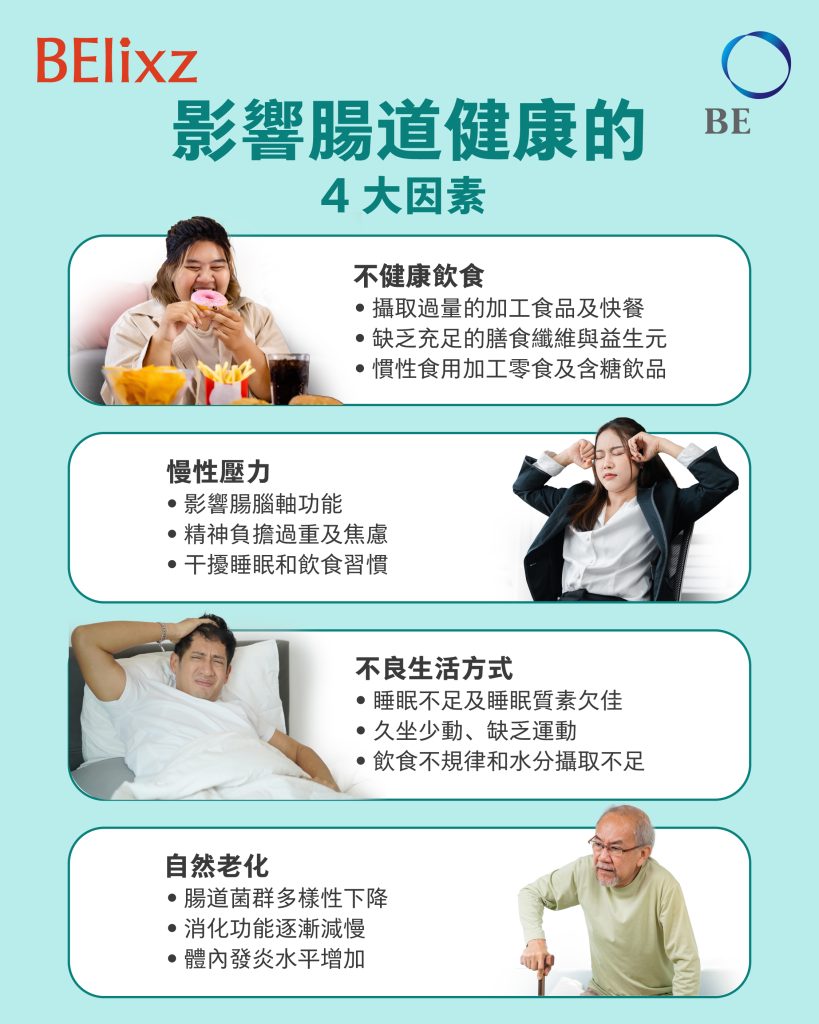
現代生活方式習慣通常被認為是影響腸道健康的因素,其中最主要的有四個。
1. 不健康飲食
當我們攝入大量加工食品、含糖飲料(如珍珠奶茶)以及快餐,而膳食纖維攝入不足時,會對腸道健康產生負面影響。當腸道無法獲得足夠的益生元、益生菌或後生元時,腸道內菌群的平衡就會被打亂。
2. 壓力與心理健康
腸道與大腦之間始終存在緊密聯繫,科學家稱之為「腸腦軸」。當我們處於壓力之下時,胃腸系統也會受到影響,從而干擾消化功能以及有益菌群的平衡。
在許多亞洲城市,人們普遍長時間工作、睡眠不足並承受較大壓力,這些因素都會對腸道健康造成影響。
3. 睡眠不足與久坐不動的生活方式
睡眠不足和久坐不動不僅會影響精力,也會損害腸道健康。當睡眠質量不佳時,身體會釋放更多細胞因子,從而加劇炎症反應,使腸道環境對有益菌更不友好,同時讓有害菌更容易繁殖。
如果久坐不動,例如在辦公室長時間工作,腸道蠕動也會減慢,容易導致腹脹、便秘,以及有害菌增加。 Wang, Wei 等人在2026年的一項研究證實,長時間久坐會損傷腸道屏障,並引發全身性炎症反應。
4. 衰老
隨著年齡增長,腸道中的有益菌數量會逐漸減少,例如雙歧桿菌以及能夠產生短鏈脂肪酸(SCFAs)的菌群。這些菌群對維持腸道屏障健康非常重要。其減少可能導致消化變慢、有益菌多樣性下降以及炎症增加。
如何自然改善腸道健康

過去,人們經常食用大量當季水果、蔬菜以及發酵食品。而如今,城市飲食多以精製碳水、不健康脂肪和加工食品為主,這種「現代飲食結構」會讓腸道微生物缺乏營養來源,導致菌群多樣性下降。
我們建議你可以堅持以下日常習慣:
• 多攝入富含膳食纖維的食物,例如蔬菜、水果、全穀物和豆類
• 多吃發酵食品,例如酸奶、泡菜、天貝、開菲爾和味噌
• 選擇結合益生元、益生菌與後生元的腸道健康補充產品
• 減少加工食品攝入,尤其是含糖飲料和零食
• 規律運動,幫助維持健康的壓力水平
• 保證充足睡眠(每晚7–9小時)
• 保持日常活動量,即使是少量運動也有幫助
恢復腸道健康需要益生元、益生菌與後生元的平衡:
- 益生元:可以理解為有益菌的「食物」,幫助它們產生對健康有益的代謝產物,從而支持整體健康。
- 益生菌:是對人體有益的活性菌群,有助於減少腹脹並改善消化功能。一個有趣的事實是,大約70%的免疫系統位於腸道中,因此益生菌也有助於支持人體自然防禦系統。
- 後生元:是有益菌在分解益生元過程中產生的活性物質,有助於改善腸道屏障功能,增強腸道屏障穩定性,並支持健康的炎症反應。
改變飲食和生活方式是基礎,但合適的腸道健康補充品,尤其是同時結合三種成分——益生元、益生菌和後生元的產品,能夠更有效幫助平衡腸道微生態。
重建腸道健康
腸道不僅僅負責消化,它在免疫力以及整體健康中扮演著更重要的角色。了解腸道的需求,並逐步改善日常生活習慣,將在長期為我們的健康帶來積極影響。
參考資料
- Bai, Xiaowu, et al. “Landscape of the Gut Archaeome in Association with Geography, Ethnicity, Urbanization, and Diet in the Chinese Population.” Microbiome, vol. 10, no. 147, 2022.
- Wang, Wei et al. “Effects of functional dietary fiber supplementation combined with home-based exercise on gut microbiota diversity and low-grade inflammation in urban sedentary adults.” Frontiers in nutrition vol. 13 1769785. 4 Mar. 2026
- Canani, Roberto Berni. “Potential Beneficial Effects of Butyrate in Intestinal and Extraintestinal Diseases.” World Journal of Gastroenterology, vol. 17, no. 12, 2011, pp. 1519–1528.
- Chen, Xuejie, et al. “Evolving Trends and Burden of Inflammatory Bowel Disease in Asia, 1990–2019: A Comprehensive Analysis Based on the Global Burden of Disease Study.” Journal of Epidemiology and Global Health, vol. 13, 2023, pp. 725–739.
- Fu, J., et al. “Dietary Fiber Intake and Gut Microbiota in Human Health.” Microorganisms, vol. 10, no. 12, 2022, article 2507.
- Ghosh, N. “Guardians Within: Cross-Talk between the Gut Microbiome and Host Immune System.” World Journal of Gastrointestinal Pathophysiology, 2025.
- Gómez, C. V. G. “Prebiotic Probiotic Postbiotic Evolution in Food: Latin America Caribbean Trends Regulations.” Archivos Latinoamericanos de Nutrición, 2025.
- Leeuwendaal, Natasha K., et al. “Fermented Foods, Health and the Gut Microbiome.” Nutrients, vol. 14, no. 7, 2022, article 1527.
- Owolo, O. “Urbanization-Induced Gut Microbiome Dysbiosis and Type 2 Diabetes in Sub-Saharan Africa: A Systematic Review of Mechanisms and Indigenous Therapeutics.” Preprints, 2026.
- Recharla, N., et al. “Gut Microbial Metabolite Butyrate and Its Therapeutic Role in Inflammatory Bowel Disease: A Literature Review.” Nutrients, vol. 15, no. 10, 2023, article 2275.
- Vinderola, G., et al. “Frequently Asked Questions about the ISAPP Postbiotic Definition.” Frontiers in Microbiology, vol. 14, 2024, article 1324565.
- Yurtseven, B. “The Role of Intestinal Microbiota and Immune System Interactions in Autoimmune Diseases.” ImmunoTargets and Therapy, 2025.